|
How do you:
|
And begin to
|
Consider chair yoga!
If you have lived for a few (or more!) decades, you know many things about your body and mind – how they move, how they're changing, what’s comfortable, and what’s not. You also have the wisdom that comes with being alive all these years.
Perhaps that wisdom leads to the desire to preserve and protect your physical and mental capabilities. Slow, mindful yoga is a great tool for doing that. And chair-based yoga, specifically, provides an opportunity to move and breathe safely and wisely, in a way that is just for you and that can change through time as you do. When you use a chair for support in yoga (to sit on, to hold while standing, or to keep nearby if needed), you have the opportunity maintain - or even build - strength, balance, and flexibility while honoring your unique body and mind.
Perhaps that wisdom leads to the desire to preserve and protect your physical and mental capabilities. Slow, mindful yoga is a great tool for doing that. And chair-based yoga, specifically, provides an opportunity to move and breathe safely and wisely, in a way that is just for you and that can change through time as you do. When you use a chair for support in yoga (to sit on, to hold while standing, or to keep nearby if needed), you have the opportunity maintain - or even build - strength, balance, and flexibility while honoring your unique body and mind.
Are you interested in in-person classes (Jacksonville, Oregon) or online?
Click on the photo that most fits your interest.
Click on the photo that most fits your interest.

|
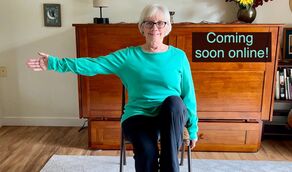
|
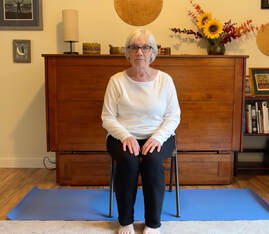
|
|
WHAT DO I MEAN BY CHAIR-BASED YOGA?
I use the term "chair-based yoga" because I want to be clear that, for those who are able, I incorporate standing poses and movements into our practices. (There is always an option to stay seated, and I give options for every pose so participants can choose the option that works best for them.) It is my firm belief that as long as we can stand and walk, we can protect those functional movements by working on the strength, balance, and flexibility that standing poses and movements provide. WHY is chair-based yoga important to consider as we age?
Benefits of Chair-based Yoga Chair yoga makes yoga more accessible to all bodies and in many situations. Examples:
The style of yoga that I offer is SLOW, MINDFUL YOGA. Here is some information about this style of yoga (and why I love it!) Slow, mindful yoga is not about the “perfect” pose. Rather, it’s about the functional benefit to your body and the internal experience. In what ways does Slow, Mindful Yoga benefit your nervous system? •It’s not about the pose; it’s about the inner experience. •Every time we pause and notice, we shift our nervous system. •The slow, pain-free movement can, over time, create new patterns of response in your brain. •You are creating greater balance in your brain and nervous system. (Note: Everything about this applies to chair-based yoga as well as mat-based yoga.) Features of Slow, Mindful Yoga that Support the Brain and Nervous System
All of the benefits of slow, mindful yoga apply to chair yoga as well! |